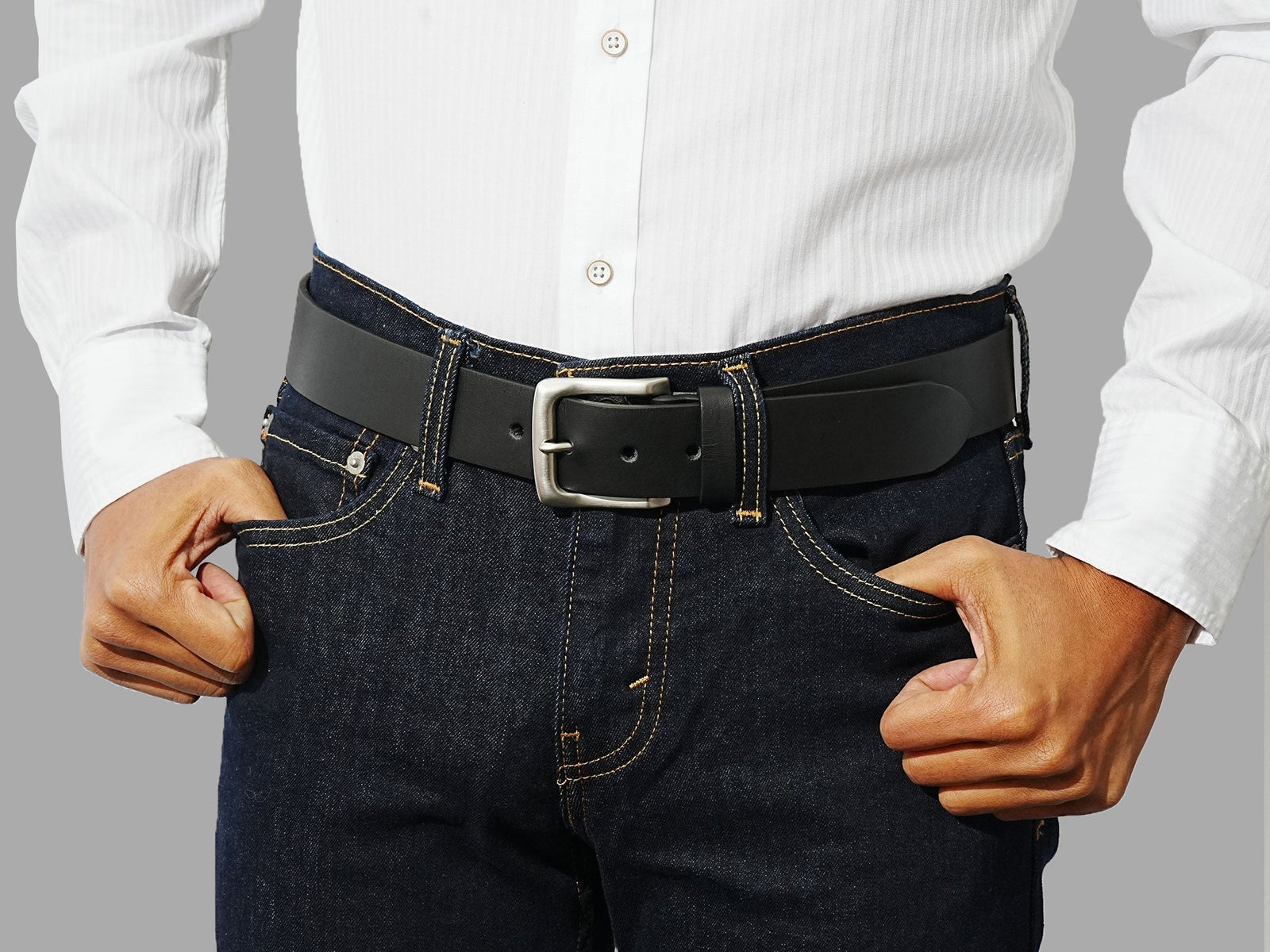

Most men give the belt less thought than almost any other part of the outfit. You pull one from the drawer, thread it through the loops, and move on. But a belt that is the wrong width, the wrong material, or the wrong colour for the occasion does more damage than not wearing one at all. Once you know what each type is built for, the decision becomes straightforward.
This guide covers the different types of men's leather belts, how to wear them, how to size them, how to look after them, and what to look for when buying one that lasts.
Types of Men's Leather Belts
There are many different types of leather belts available. Below is a summary of the main categories you will encounter, with particular focus on the three types that Sparrods & Co produces.
Dress Belts (Stitched Edge Belts)
Dress belts are also called stitched edge belts or formal dress belts. These are the narrowest option in the men's belt range. They run between 28mm and 32mm in width. The narrow profile keeps them suited to dress trousers and suits where a wider strap would look out of proportion with the trouser leg.
 Sparrods & Co | Stalwart Dress Belts
The defining construction feature is the stitching along both edges of the strap. This edge stitching reinforces the leather and keeps the shape of the belt consistent over time. A quality dress belt is made from full grain calfskin and fully lined, with no cardboard or synthetic filler. The lining keeps the back of the belt smooth against the trousers and adds structure.
The buckle on a dress belt is typically a single prong frame buckle in polished or brushed metal. It is smaller and flatter than a casual buckle. It sits flush rather than bulking out at the waist, which matters when wearing the belt under a jacket.
 Sparrods & Co | Stalwart Black Dress Belt
The Sparrods Stalwart dress belt is built to this specification. It features a 32mm width, full grain calfskin from Spain, full leather lining with no fillers, and a metal frame buckle. It is available in black, cognac, espresso, burgundy, and suede espresso.
Casual Belts
Casual belts are wider than dress belts, typically running between 35mm and 40mm in width. The extra width is what places them in the casual category. A wider strap reads as more relaxed and is proportionally suited to jeans, chinos, shorts, and heavier fabric trousers where a narrow dress belt would look too slight.
 Sparrods & Co | Urban Casual Belts
A quality casual belt is made from full grain leather, but the material tends to be slightly thicker than a dress belt. It is built to handle daily wear through all kinds of use, not just office environments. The buckle tends to be larger and can have more presence than a formal frame buckle, though it does not need to be decorative.
 Sparrods & Co | Urban Burgundy Casual Belt.
The Sparrods Urban casual belt runs at 38mm width and is made from full grain calfskin from Spain with full leather lining and no filler. It is available in black, cognac, espresso, and burgundy.
Brogue Belts
Brogue belts are distinguished by traditional decorative perforations along the edges and sometimes across the body of the strap. The same perforated detailing that appears on brogue shoes and boots appears on the belt, which makes them a natural pairing with brogue shoes, boots, or sneakers.
 Sparrods & Co | Highland Brogue Belts
At 35mm wide, the brogue belt sits between the narrow dress belt and the wider casual belt. It is versatile enough to wear with smart casual outfits and pairs well with textured fabrics and less formal trousers. The perforations give the belt visible character without it becoming the focal point of the outfit.

Sparrods & Co | Highland Cognac Brogue Belt
Full grain calfskin is the right material for a brogue belt. The perforations need a leather that holds its shape around each punched hole without fraying or cracking over time. The Sparrods Highland brogue belt runs at 35mm and is available in black, cognac, espresso, and burgundy.
Braided leather Belts
Braided leather belts are made from strips of leather woven together. They are more adjustable than a traditional flat strap belt because the buckle prong can be secured through any gap in the braid. They work well with summer clothing, chinos, and sports jackets, but are generally less suited to suits and formal business wear.

Image taken from Trecolli Calzature IG
Canvas and webbing Belts
Canvas and webbing belts are functional rather than dressy. They are commonly seen in military, outdoor, and casual settings where practicality takes precedence over appearance. The buckle is often a box frame or D ring style.

Image taken from hab2016jp IG
Tooled leather Belts
Tooled leather belts feature patterns stamped into the surface of the leather. They are most commonly associated with Western dress and country wear. Because the belt itself draws attention, they usually work best with simpler outfits.

Image taken from BUCK’N CO IG
Reversible belts
Reversible belts feature two colours on a single strap, allowing the belt to be worn on either side. They appeal to those looking for flexibility, though the leather is often thinner than that of a traditional single sided belt, which can affect long term durability.
Stretch and elastic Belts
Stretch and elastic belts do not use traditional belt holes and are adjusted through a hidden fastening system. They are designed primarily for comfort and are generally worn in casual settings rather than tailored clothing
 Image taken from oggreenspans IG
Belt Buckles Materials
The buckle is the most visible part of the belt when you are wearing it. Getting it right matters as much as choosing the leather.
Frame Buckle (Single Prong)
This is the most common buckle for dress and smart casual belts. It uses a rectangular or square frame with a single prong that passes through a hole in the strap. It sits flat and does not create bulk under a jacket, making it the right choice for office wear and formal occasions.

Sparrods & Co | Urban Causal Belt Frame Buckle
Double Prong Buckle
This variation features two prongs instead of one. It is more common on casual and workwear belts. While it is more secure than a single prong, it adds more visual weight.

Image taken from Mirgoods IG
Plate Buckle
This style uses a flat decorated plate that covers the front of the buckle. It is common on Western style belts and casual belts where the buckle is intended to be a visual feature. It is usually detachable so it can be swapped across different straps.

Image taken from hubsofcap IG
Box Frame Buckle
This design relies on a hollow rectangular frame with a post that pins the strap without the need for holes. It can be adjusted at any point along the strap and is common on canvas and casual belts.

Image taken from Baique Accessories
How to Wear a Men's Leather Belt
The main rule is straightforward: pair your leather colours and match your metals. When you put on a dress belt, choose a leather that matches your shoes. Black leather goes with black shoes. Espresso goes with dark brown boots. Cognac goes with tan loafers.
Wearing a 32mm Dress Belt
The 32mm dress belt is your narrow strap, constructed from smooth full grain calfskin with flat, stitched edges. It belongs with business suits, dress trousers, and tailored clothing.

Sparrods & Co | Stalwart Black Dress Belt

Sparrods & Co | Stalwart Burgundy Dress Belt

Sparrods & Co | Stalwart Suede Dress Belt
The slim 32mm width stays out of the way on your trousers without drawing unnecessary attention to your waistline.
● Wear a black dress belt with a charcoal suit, a white shirt, and black men's Oxford dress shoes. Black belts work with black, dark navy, dark grey and charcoal footwear. They do not pair well with tan or brown shoes in a formal context.
· Pair a tan dress belt with a navy suit and tan leather loafers for men.
· Wear an dark brown dress belt with olive trousers, a navy blazer, and dark brown monk strap shoes
· Pair a burgundy dress belt with grey trousers and oxblood men's leather dress shoes
· Pair a brown suede dress belt with stone trousers and brown suede loafers
Wearing a 35mm Brogue Belt
The 35mm mid-width strap features traditional punched detailing along the edges. It is a casual style made from durable leather that works with textured fabrics, heavy cotton chinos, and sport coats.

Sparrods & Co | Highland Tan Brogue Belt

Sparrods & Co | Highland Brogue Belts in Espresso
The perforation details complement footwear that features traditional broguing.
· Wear a black brogue belt with dark gray chinos and black men's brogue wingtip boots or brogue sneakers.
· Pair a tan brogue belt with stone trousers and men's tan brogue shoes.
· Wear a dark brown brogue belt with olive cargo trousers and similar shade of brogue shoes or dark brown wingtip boots.
· Pair a burgundy brogue belt with charcoal winter trousers and oxblood brogue shoes.
For brogue shoes and boots to match your belts, see our full range: Simba Oxford Brogues Boots, Outback Brogue Boots and Alpha Brogues Sneakers
Wearing a 38mm Casual Belt
The 38mm casual belt is a wide, substantial strap cut from thick, vegetable-tanned leather. It works with the wider loops on raw denim jeans, heavy canvas shorts, and casual trousers.

Sparrods & Co | Urban Burgundy Casual Belt

Sparrods & Co | Urban Espresso Casual Belt
A thinner belt looks out of place against heavier fabrics, while this width balances the weight of denim. It is the most popular choice for everyday wear.
· Wear a black casual belt with dark raw denim, a white tee, and white men’s leather sneakers.
● Pair a cognac casual belt with stone cotton chinos and cognac leather loafers. Cognac and tan belts are more versatile than most men expect. They work with olive, navy, camel, stone, grey, and most earth tones.
● Wear a dark brown casual belt with mid-wash jeans and men’s dark brown boots Dark brown belts sit between black and tan and work with most colour palettes. Particularly strong with charcoal, navy, olive, and rust.
· Pair a burgundy casual belt with charcoal trousers and burgundy sneakers. Burgundy and oxblood belts work with charcoal, grey, navy, cream, and olive. In summer they carry well against whites and stones. In autumn and winter they work with flannel and heavier fabric tones.
For casual shoes, sneakers and boots to match your belts, see our full range: Men’s leather boots, Sneakers and loafers
Men's Leather Belt Sizing Guide
To find your correct belt size, take your standard trouser waist size and add two inches. If you wear size 34 trousers, your belt size is 36. A properly fitted belt should secure comfortably on the middle hole, leaving just enough strap length to tuck cleanly into your first trouser loop without hanging loose
The Standard Rule
Your belt size should be 2 inches larger than your trouser waist. A 34 inch waist takes a 36-inch belt, and a 36-inch waist takes a 38-inch belt. This gives you enough strap to go through all the belt loops and land on the middle hole, with a short tail on the other side of the buckle.
The Middle Hole Rule
A well-fitting belt should fasten on or near the middle hole. Most belts have five holes. You want to be using hole three of five under normal circumstances. If you are consistently on hole one or two, the belt is too long. If you are on hole four or five, the belt is too short.
Measuring From Your Current Belt
If you have a belt that fits you well, measure from the fold at the buckle end to the hole you actually use. That measurement is your belt size, so you can order the same length in a new belt.
Dress Belt Tail Length
A dress belt should have a short tail once fastened. Two to four inches past the buckle is enough. The tail should fit through the first belt loop on your trousers and not extend further. A long tail hanging out on a dress belt looks unfinished. Casual belts can have a slightly longer tail, but it should not flap around. If necessary, trim excess length through a cobbler or leather goods maker rather than cutting it by hand.
Before purchasing, refer to Sparrods standard measurements and guidance on our official sizing chart to choose the right fit.
How to Care for a Men's Leather Belt
A full grain leather belt that is looked after properly can last for years. The same belt neglected will crack, lose its shape, and look worn out within a season. The maintenance involved is not complicated and does not take much time.
Keep It Dry
Leather absorbs moisture and can crack if it dries out unevenly after getting wet. If your belt gets wet, let it dry at room temperature away from direct heat. Do not put it near a radiator, a heater, or in direct sunlight to speed up the drying process. Heat dries leather too quickly, causing it to stiffen and crack.
Condition Regularly
Full grain leather needs moisture to stay supple. A leather conditioner or balm applied two to four times a year keeps the leather from drying out. Apply a small amount with a cloth, let it absorb, and buff off any excess. This also feeds the patina that develops with wear, which gives a well-used belt its character over time.
Polish When Needed
A full grain leather belt responds well to shoe polish in the matching colour. Apply with a small brush or cloth, let it dry, and buff to a shine. This fills any minor surface marks and refreshes the colour. Do not use shoe polish on suede.
Suede Care
Suede belts require a suede brush to maintain the texture. Brush in one direction to lift the nap after it gets flattened. A suede protector spray applied before first wear and refreshed periodically will help repel water and light staining. Do not use wax or cream polish on suede, as it will mat the texture permanently.
Storage
Store belts flat or loosely rolled rather than folded at a sharp angle. A sharp fold at the same point every time will eventually crack the leather at that spot. Hanging storage through the buckle is fine for most belts. Keep them out of prolonged direct sunlight, which can fade the colour and dry out the leather.
Buckle Care
Wipe metal buckles with a dry cloth to remove any moisture or sweat. A very light application of metal polish on the buckle face can restore shine if it becomes dull, but keep the polish away from the leather.
What to Look for When Buying a Men's Leather Belt
A good leather belt should look right, feel solid and last for years. Focus on the materials, the way it is put together, the width and the buckle so you end up with a belt that works across your outfits and handles daily wear.
Full Grain Leather
Full grain is the outermost layer of the hide. It retains the natural grain of the leather, which means it is denser, stronger, and more resistant to cracking than corrected or split leather. It also develops a patina as it ages. Any belt described as genuine leather, bonded leather, or top grain leather is made from a lower grade of hide. Full grain calfskin remains one of the strongest choices for dress, brogue, and smart casual belts.
No Cardboard or Synthetic Filler
Cheap belts are constructed with a cardboard or synthetic core inside the leather strap to add stiffness and bulk. This is why cheap belts delaminate and crack within a year of regular use. A quality belt is lined with leather throughout, no filler. The Sparrods range uses full grain calfskin lined with a soft calf leather lining with no cardboard or synthetic material at any point.
Edge Stitching Quality
Look at the stitching along the edges of the strap. Tight, even stitching with no loose ends is a good indicator of how the belt has been constructed overall. Stitching that is uneven or beginning to separate is a warning sign regardless of how good the leather looks on the surface.
Width for the Occasion
Width determines where the belt belongs. 32mm for suits and dress trousers. 35mm for smart casual. 38mm for jeans, chinos, and casual wear. Wearing a 38mm belt with a suit looks wrong in the same way wearing a thin dress belt with jeans looks wrong. The width should match the formality of the occasion and the weight of the fabric.
The Buckle Fit
Check how the buckle attaches to the strap. A stitched buckle is fixed and reliable. A snapped or riveted attachment can loosen over time with repeated use. For a dress, casual and brogue belt you will use regularly, stitched attachment is more durable.
Sparrods works with leather goods makers in Spain who have spent decades producing leather belts and footwear, giving them a deep understanding of leather construction, materials, and finishing. Full leather lining throughout. The width is standardised across each type, 32mm for dress, 35mm for brogue, 38mm for casual, so the sizing decision is made for you by the occasion